
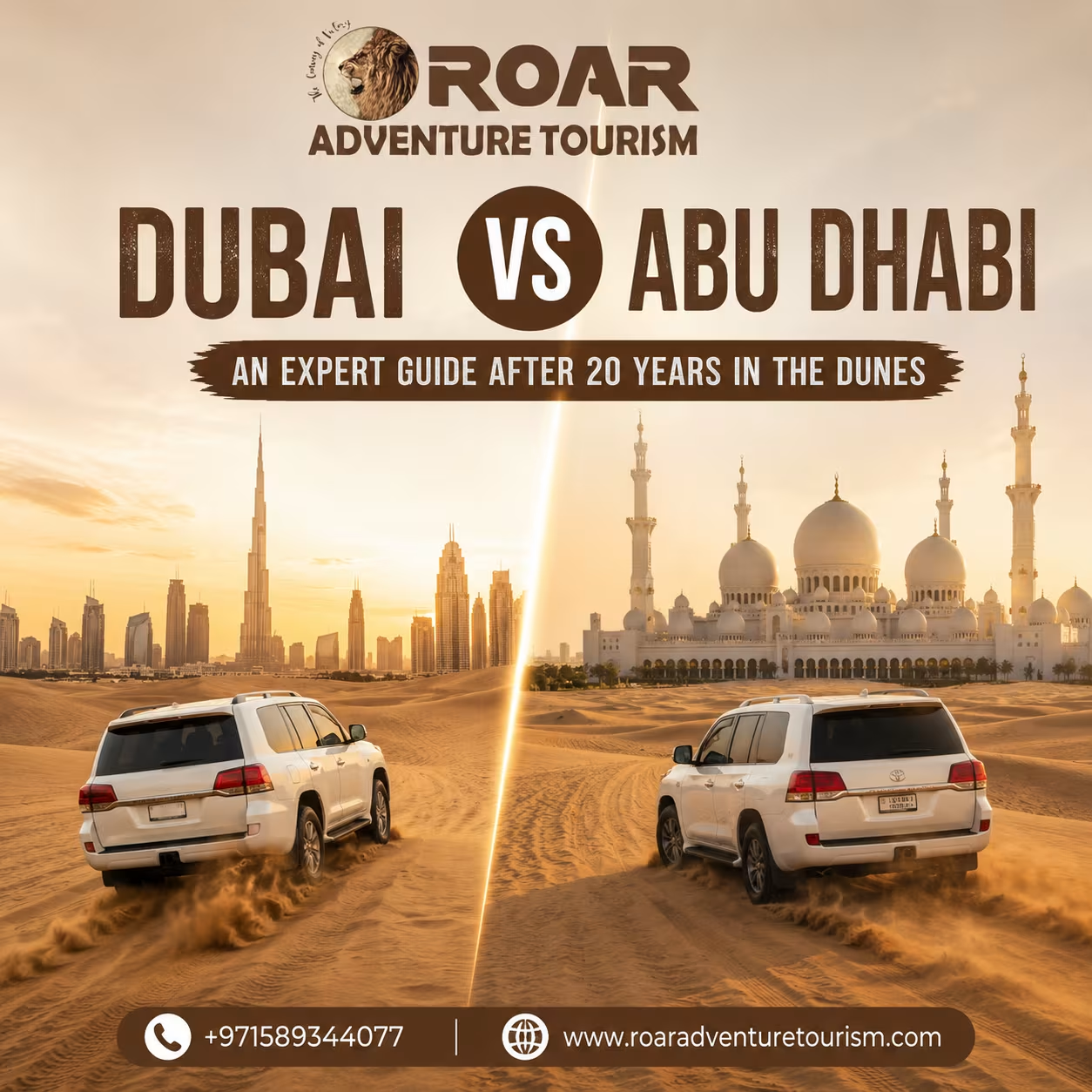
I have been guiding desert safaris across the UAE for over two decades, first out of Lahbab in the early years of Dubai’s tourism boom, and later across Al Khatim and Liwa as Abu Dhabi built out its own safari industry. I have driven the same red dune ridge in Lahbab on a hundred different sunsets, and I have sat in Liwa at 2am watching the Milky Way with a group of guests who had never seen a sky that dark in their lives. This guide is built from that experience, not from a spec sheet.
This guide compares the Dubai vs Abu Dhabi desert safari across every factor travelers actually search for: distance, dune height, pricing, and atmosphere. It covers Dubai’s red sand dunes in Lahbab, Al Awir, and the Al Marmoom Desert Conservation Reserve, set 30 to 45 minutes from the city, alongside Abu Dhabi’s golden dunes in Al Khatim, Al Wathba, and Liwa, bordering the Rub’ al Khali Empty Quarter, home to Liwa Crescent, one of the tallest sand dunes in the world. Written from the perspective of a 20 year desert safari guide, it breaks down dune bashing, camel riding, quad biking, falconry, stargazing, and BBQ camp dinners, along with real AED pricing tiers for shared, private, and VIP packages. Includes a full inclusions and exclusions table, family versus couples recommendations, combo itinerary ideas, seasonal timing, operator safety checks, and direct answer FAQs built to match how travelers and AI search tools phrase this comparison.
Dubai vs Abu Dhabi Desert Safari: Which one to Book?
If you want convenience and energy, book Dubai. It is 30 to 45 minutes from the city, priced from AED 149, and built around fast, entertainment heavy evenings across Lahbab, Aweer, Al Marmoom, and the Dubai Desert Conservation Reserve. If you want scale and silence, book Abu Dhabi. It is 60 to 150 minutes out, priced from AED 350, and centers on larger, quieter terrain, with Liwa Crescent standing among the tallest sand dunes on Earth at over 300 meters. I have guided both for years, and the honest answer is that neither beats the other. They solve different problems.
Dubai vs Abu Dhabi Safari at a Glance
| Attribute | Dubai Desert Safari | Abu Dhabi Desert Safari |
|---|---|---|
| Travel time from city | 30 to 45 minutes | 60 to 150 minutes, 2+ hours to Liwa |
| Named desert zones | Lahbab, Al Awir, Al Marmoom, DDCR | Al Khatim, Al Wathba, Liwa, Empty Quarter |
| Dune color | Red | Golden |
| Typical dune height | 30 to 50 meters | 100 meters, 300+ meters at Liwa Crescent |
| Starting price | AED 149 | AED 350 |
| Premium/VIP price ceiling | AED 2,500 | AED 15,000 |
| Atmosphere | Energetic, commercial, social | Quiet, spacious, traditional |
| Signature activities | Dune bashing, quad biking, dune buggies, belly dance, fire shows | Falconry, stargazing, camel trekking, Bedouin storytelling |
| Best suited for | Families, first timers, short trips, groups | Couples, luxury travelers, dune purists, longer stays |
What the Distance Actually Feels Like in the Vehicle
Numbers on a page do not tell you what a transfer feels like after a full day of sightseeing. Dubai’s 30 to 45 minute run out to Lahbab or Al Aweer is short enough that guests are usually still alert and excited when we hit the first dune. I have watched thousands of first timers go from office attire to sandboarding within the hour, and that speed is the whole appeal.
Abu Dhabi is a different rhythm. The drive to Al Khatim, at 60 to 90 minutes, gives the desert time to change the mood in the vehicle. Conversations get quieter. People start noticing the horizon instead of their phones. When we push further, past two hours, toward Liwa and the edge of the Rub’ al Khali, that drive becomes part of the experience itself, not a delay before it. I never book a Liwa run as an evening add on. It deserves its own day, or better, an overnight stay.
If your time in Dubai is limited and you want the dunes without losing an evening, an evening desert safari in Lahbab or Al Awir is the version I recommend to guests on a tight schedule.
Which Desert Actually Has the Better Dunes
I get asked this more than anything else, and the honest answer depends on what “better” means to you. If you want height and scale, Abu Dhabi wins outright. Al Khatim’s dunes run close to 100 meters, and Liwa Crescent, right at the doorstep of the Empty Quarter, is recognized as one of the tallest sand dunes on the planet at over 300 meters. Standing at the base of that dune, after twenty years of doing this, still stops me for a second every time.
If you want drama in a shorter window, Dubai wins. Lahbab’s red dunes, at 30 to 50 meters, are steeper and closer together, which is exactly what makes the dune bashing feel sharper and the sunset photos hit harder. The iron oxide in that sand turns almost blood orange in the last twenty minutes of light, and I have never seen a guest unimpressed by it, even guests who have done a dozen safaris elsewhere.
So the real answer: biggest dunes, Abu Dhabi. Most dramatic dunes for the time invested, Dubai. For guests who want that signature red sand experience without committing a full day, I point them to our red dunes safari.
What a Dubai vs Abu Dhabi Safari Actually Costs
Pricing questions come up on nearly every booking call, and the ranges below reflect what I have seen operators charge across both cities in 2026.
Dubai desert safari pricing, per person
- Shared or standard evening safari: AED 149
- Safari with quad biking or dune buggy add on: AED 259 to AED 900
- Private or VIP safari: AED 999 to AED 2,500
Abu Dhabi desert safari pricing, per person
- Shared or standard evening safari: AED 350 to AED 600
- Premium camp with falconry and extended activities: AED 600 to AED 1,800
- Luxury or overnight Liwa/Empty Quarter experience: AED 2,500 to AED 15,000
Dubai is consistently the cheaper option at every tier. Shorter transfers, higher guest volume, and more competition among operators keep prices down. Abu Dhabi’s premium tiers reflect real costs, longer fuel and staff time, smaller group sizes, and access to more remote terrain that fewer operators are equipped to reach safely.
For guests who want a premium feel without Abu Dhabi’s top end pricing, our VIP desert safari in Dubai is the package I steer most first time luxury travelers toward.
What Is Actually Included, From Someone Who Has Run Both
Every operator lists inclusions slightly differently, but here is the honest baseline I have seen hold across most reputable Dubai and Abu Dhabi camps.

| Inclusion | Dubai Desert Safari | Abu Dhabi Desert Safari |
|---|---|---|
| Hotel pickup and drop off | Yes | Yes |
| Dune bashing in 4×4 | Yes | Yes |
| Camel ride | Yes, usually included | Yes, usually included |
| Quad biking | Optional add on, widely available | Less common, fewer operators |
| Dune buggy | Optional add on, widely available | Rare |
| Sandboarding | Common | Common |
| Falconry display | Rare | Common |
| Live entertainment | Belly dance, Tanoura, fire show | Traditional music, storytelling |
| Dinner style | BBQ buffet | BBQ or set traditional menu |
| Stargazing focus | Secondary | Primary, due to darker skies |
| Alcohol | Available at extra cost at some camps | Rarely available |
Souvenirs, professional photography packages, and alcohol are almost always excluded unless explicitly stated, and I always tell guests to confirm this before booking rather than assuming it is bundled in.
Guests who want the full classic Dubai lineup in one clean package usually end up on our evening desert safari with BBQ dinner, which covers the core inclusions above without needing to stack add ons.
The Atmosphere Difference You Only Notice On Site
You cannot fully capture this in writing, but I will try. Dubai’s camps run loud, in the best sense. Multiple vehicles arrive close together, the fire show crew is warming up, music is playing, and there is a buzz that guests either love or find a bit much. It is built for groups and for guests who want a full sensory evening in one sitting.
Abu Dhabi’s camps run differently. Fewer vehicles, more space between seating areas, and a pace that slows down naturally once the sun drops. I have had guests tell me it is the first time in their trip they actually heard silence. That is not an accident. It is the lower guest density and the greater physical space between camps that makes it possible.
If the Dubai energy is what you are after, our VIP desert safari with quad bike packs the most activity into one booking.
Activities, Ranked by What Actually Gets the Best Reaction
Dubai desert safari activities
- Dune bashing, still the number one reaction getter after twenty years
- Quad biking and dune buggy rides
- Camel rides
- Sandboarding
- Live shows, fire performances, belly dancing, Tanoura dance
- BBQ dinner with unlimited soft drinks
Abu Dhabi desert safari activities
- Dune bashing, smoother terrain in most zones outside Liwa
- Camel trekking, with more cultural framing and slower pacing
- Falconry displays, consistently the most photographed moment of an Abu Dhabi evening
- Stargazing sessions, genuinely different from anything Dubai’s brighter skies can offer
- Traditional music and Bedouin storytelling
- Dinner under the stars, often in a majlis style setting
Guests who want both the adrenaline and the tradition without the longer Abu Dhabi transfer usually combine a dune buggy adventure in Dubai with a camel riding safari in Dubai, which gets close to both worlds in one trip.
Who I Actually Recommend Each Safari To
After guiding thousands of guests, the pattern is consistent. Families do better in Dubai, mainly because the shorter drive matters more with kids than any activity difference. Couples looking for a romantic, quiet evening tend to prefer Abu Dhabi, largely for the stargazing and the lower crowd density, though I have closed much of that gap for couples with our private desert safari Dubai, which removes the crowd factor entirely while keeping the shorter drive.
Solo travelers and first timers almost always do better in Dubai, simply because the shorter commitment lets them fit more into a trip. Guests on their second or third UAE visit, or genuine landscape and photography enthusiasts, are the ones I steer toward Abu Dhabi and Liwa specifically.
Combining Both Safaris in One Trip
Yes, you can do both, and on trips of four days or longer I recommend it. Dubai and Abu Dhabi sit about 1.5 hours apart by road, and the contrast between a high energy Dubai evening and a quiet Abu Dhabi one is, in my experience, more memorable than either alone. I usually suggest the Dubai safari early in the trip, paired with a Dubai city tour, and the Abu Dhabi leg later, paired with an Abu Dhabi city tour on the same or an adjacent day.
Morning, Sunrise, and Avoiding the Heat
Evening safaris get the marketing attention, but I send a meaningful share of my guests, especially in summer, toward morning departures instead. Cooler temperatures, quieter dunes, and softer light make for a completely different feel, and you avoid the crowd volume of the evening camp shows entirely.
Guests who prioritize comfort over the evening entertainment package should look at a morning desert safari in Dubai or a sunrise desert safari, both of which I personally prefer over the evening slot during the hottest months.
If You Do Not Want Dune Bashing
Not every guest wants the high speed 4×4 driving. I have guided pregnant travelers, guests with motion sensitivity, and guests who simply find it unpleasant, and there is no reason to force it. Both cities offer alternatives built around camel rides, camp activities, and scenery rather than off road driving. In Dubai, our desert safari without dune bashing covers exactly this need without cutting the rest of the experience.
Is an Overnight Safari Worth the Extra Cost
In my experience, yes, for the right traveler. An overnight stay is the only way to genuinely experience sunset, full darkness stargazing, and sunrise in one uninterrupted trip. It suits Abu Dhabi’s Liwa region especially well, given the distance already involved, but Dubai also runs strong overnight options for guests who want that full arc without the multi hour transfer. Our overnight desert safari in Dubai is the version I recommend most often for guests who want this without sacrificing a full day of their trip elsewhere.
Best Time of Year, From Someone Who Has Guided Through Every Season
October through April is peak season for a reason. Temperatures are comfortable enough for the full range of activities, and both cities run at full capacity. Summer, May through September, brings daytime heat that regularly passes 45 degrees Celsius, and I always push guests toward morning or early evening slots during this window, never midday.
Dubai’s shorter transfer makes summer more forgiving, since less time is spent exposed to heat during pickup and drop off. Abu Dhabi’s longer drives, especially toward Liwa, are genuinely better suited to the cooler months, since a two hour transfer in extreme heat compounds discomfort in a way a 45 minute Dubai transfer does not. December and January are our busiest months across both cities, so I always tell guests to book several days ahead if they want a specific pickup time, especially for private or VIP packages.
What the Light Actually Does to Each Desert
I have shot sunset from the same Lahbab ridge more times than I can count, and the red sand there does something distinctive in the final twenty minutes before the sun drops, turning a deep, almost saturated orange that has become the visual shorthand for UAE desert photography online. The dunes sit close together and steep, which throws hard shadow contrast into photos taken in that window.
Abu Dhabi’s golden dunes behave differently under the same light, softer, more expansive, and better suited to wide panoramic shots that emphasize distance rather than dramatic close range shadow. Once the sun is down, Abu Dhabi pulls ahead again for stargazing, since the greater distance from city lights gives noticeably darker skies during camp hours, something I point out to every photography focused guest who books with us.
Neither desert needs professional equipment to get strong results, though most camps in both cities, ours included, offer paid professional photography add ons for guests who want polished images without carrying their own gear.
How I Tell Guests to Vet a Desert Safari Operator
After twenty years watching operators come and go, a few checks consistently separate the reliable ones from the rest.
- Ask about the vehicle type and the driver’s actual dune bashing experience, since this is where safety is won or lost.
- Confirm whether pricing is per person or per vehicle before you book, since this changes group costs significantly.
- Ask directly what the operator’s policy is during extreme heat or sandstorm warnings, and whether rescheduling is free.
- Get a clear list of what is included versus what costs extra, particularly photography, alcohol, and private transport.
- Favor operators who give you specific pickup and return times rather than a vague window, since vague timing is often the first sign of an overbooked operator.
Beyond the Desert: What I Usually Pair With a Safari
Most guests build their UAE trip around more than one experience, and a few pairings have consistently worked well across the years I have been arranging these:
- A Hatta day trip with mountain tour for guests who want mountains and wadis alongside the desert
- A hot air balloon ride for an aerial view of the same dunes you will drive through that evening
- A dhow cruise dinner for a waterfront evening that contrasts nicely with the desert the next day
None of these replace the core decision between Dubai and Abu Dhabi, but they round out a longer trip well around whichever safari you choose.
Frequently Asked Questions
What is the main difference between a Dubai and Abu Dhabi desert safari? Dubai’s safari is closer, cheaper, and built around fast paced entertainment, with red dunes reaching 30 to 50 meters. Abu Dhabi’s safari is farther, pricier at the top tier, and centers on larger golden dunes, including Liwa Crescent at over 300 meters.
Which desert safari has taller sand dunes? Abu Dhabi has the taller dunes. Al Khatim reaches around 100 meters, and Liwa Crescent, near the Empty Quarter, is recognized as one of the tallest sand dunes in the world at over 300 meters.
How much does a Dubai desert safari cost? A standard Dubai desert safari costs between AED 99-149 and AED 259 per person, with quad biking or dune buggy add ons pushing the price to AED 699-999, and private or VIP packages reaching up to AED 999.
How much does an Abu Dhabi desert safari cost? A standard Abu Dhabi desert safari costs between AED 350 and AED 600 per person, with premium camps reaching AED 600 to 1,800, and luxury or overnight Liwa experiences ranging from AED 2,500 up to AED 15,000.
How far is the desert from Dubai city center? Most Dubai safaris reach the desert within 30 to 45 minutes, commonly in Lahbab, Al Awir, or the Al Marmoom Desert Conservation Reserve.
How far is the desert from Abu Dhabi city center? Most Abu Dhabi safaris reach Al Khatim or Al Wathba within 60 to 90 minutes, while trips to Liwa and the Empty Quarter take over two hours each way.
Which desert safari is better for families? Dubai is generally better for families, mainly because the shorter travel time matters more with children than any single activity difference.
Which desert safari is better for couples? Abu Dhabi is generally better for couples, largely due to lower crowd density and stronger stargazing conditions, though a private Dubai safari closes much of this gap.
Can I do both a Dubai and Abu Dhabi desert safari on one trip? Yes. Since the two cities are about 1.5 hours apart by road, guests on trips of four days or longer commonly do both, often pairing each safari with a city tour on a separate day.
Is dune bashing included in both safaris? Yes, dune bashing is included in standard packages in both cities, though alternatives without dune bashing are available for guests who prefer not to do it.
What is the Empty Quarter and how does it relate to this comparison? The Rub’ al Khali, or Empty Quarter, is the largest continuous sand desert in the world and borders the Liwa region used in extended Abu Dhabi safaris. It is the source of Abu Dhabi’s largest and most remote dunes, including Liwa Crescent.
Which desert safari is more affordable overall? Dubai is consistently more affordable across every price tier, mainly due to shorter transfer times and higher guest volume keeping operating costs lower.
Book With Someone Who Has Actually Guided Both Deserts
I have spent twenty years in these dunes, and every recommendation in this guide comes from actual evenings on site, not a brochure. Whether you want the fast, activity packed version close to Dubai or the longer, quieter run toward Abu Dhabi’s bigger dunes, Roar Adventure Tourism can put together the right package for your trip. Tell us your dates, your group, and whether you are chasing speed or scale, and we will guide you to the right choice, from a standard evening desert safari to a full premium desert safari experience.