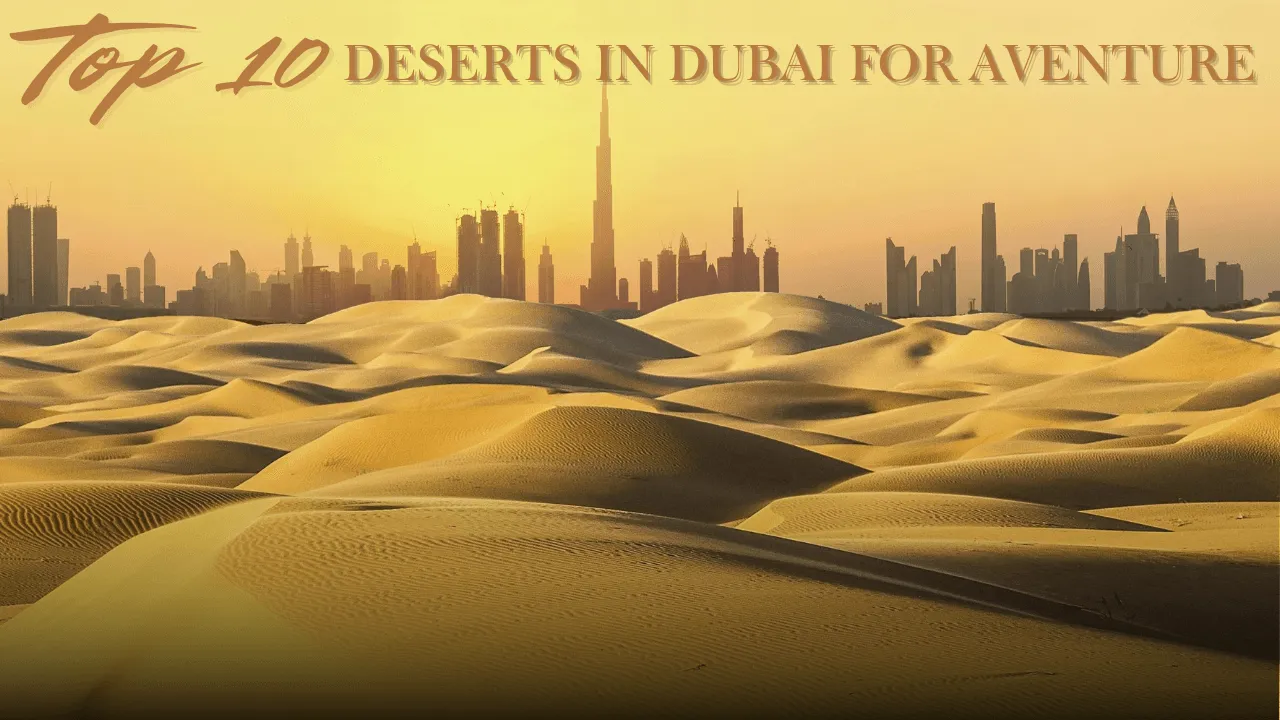
Dubai sits within the Arabian Desert the fourth-largest desert on Earth and the largest in Asia, covering approximately 2.33 million square kilometres across the Arabian Peninsula. The Arabian Desert stretches from Yemen in the south to Jordan and Iraq in the north, bounded by the Red Sea to the west and the Persian Gulf to the east.
What Is the Name of the Desert in Dubai?
So when someone searches for the “Dubai desert name,” the scientifically correct answer is the Arabian Desert (Al Sahraa Al Arabiyya in Arabic). However, Dubai’s desert landscape is far more nuanced than a single name. Within the broader Arabian Desert, several distinct desert zones surround Dubai each with its own name, character, terrain, and adventure potential.
The most famous desert near Dubai is the Lahbab Desert, also called the Red Dunes Desert or Al Lahbab Desert, located about 50–60 km southeast of Dubai city. For safari tourism, three zones dominate: Lahbab Red Dunes vs Al Aweer Desert and the Dubai Desert Conservation Reserve (DDCR)
Understanding which desert you’re visiting and why is the key to booking the perfect desert experience.
The Arabian Desert: Dubai’s Great Desert Explained
The Arabian Desert is composed of three interconnected sub-deserts:
- Rub’ al Khali (Empty Quarter) the world’s largest continuous sand desert, covering over 650,000 km², extending into the southern UAE from Saudi Arabia, Oman, and Yemen. Its striking red-orange sands get their colour from iron oxide (feldspar) coating individual sand grains. Dunes reach up to 250 metres in height.
- An-Nafud the northern desert of the Arabian Peninsula
- Ad-Dahna a 1,200-km sandy corridor connecting the two
Dubai lies at the northeastern edge of this vast sand sea. The emirate itself covers approximately 4,114 km², and much of its hinterland consists of erg (sandy desert), sabkha (salt flats), and gravel plains (reg). The desert terrain near Dubai features several dune types shaped by millennia of wind:
- Barchan (crescent) dunes formed by unidirectional winds, mobile and fast-moving
- Linear dunes long parallel ridges aligned with prevailing winds
- Star-shaped dunes rare formations created by multi-directional winds
The red colour of dunes near Dubai, particularly in the Lahbab region, comes from the same iron-oxide mineralogy found in the Rub’ al Khali millions of years of weathering have coated quartz grains in a rust-like film. At sunset, this terracotta hue intensifies dramatically, making Lahbab one of the most photographed desert landscapes in the world.
Is Dubai a Desert City?
Yes and proudly so. Dubai was historically a desert settlement inhabited by Bedouin tribes of the Bani Yas confederation, who navigated the featureless desert using starlight, wind patterns, and subtle sand formations. Their traditions falconry (a UNESCO Intangible Cultural Heritage), camel breeding, and desert camping are still celebrated in Dubai desert safari experiences today.
The Burj Khalifa, the world’s tallest building, rises 828 metres above what was, just decades ago, open desert. That contrast between ancient sand and modern skyline defines Dubai’s unique identity.
Is Dubai Surrounded by Desert?
Essentially, yes. The Arabian Desert wraps around Dubai on three sides south, southeast, and east. The north and west open to the Persian Gulf coastline. Within a 35–100 km radius of downtown Dubai, you will find at least eight distinct desert locations, each offering different terrain, wildlife, and experiences.
Here is a complete breakdown of every major desert in and around Dubai:
All 8 Deserts in Dubai: Names, Locations & What Makes Each Unique
Lahbab Desert (Red Dunes Desert) The Most Famous Desert in Dubai
- Also known as: Al Lahbab Desert, Red Sand Desert, Dubai Red Dunes
- Distance from Dubai: 50–60 km southeast, along Hatta Road
- GPS Coordinates: 24.8853°N, 55.6950°E
The Lahbab Desert is the undisputed king of Dubai desert safari experiences. Its defining feature is the deep terracotta-red sand, coloured by high concentrations of iron oxide the same compound that makes rust red. The dunes here are tall, steep, and soft-textured, making them ideal for high-adrenaline dune bashing as well as stunning sunset photography.
Key Lahbab facts:
- Dunes reach heights of 100+ metres among the tallest accessible from Dubai
- Home to the Arabian oryx (once near extinction, successfully reintroduced), sand gazelles, and desert foxes
- Archaeological evidence of human occupation dating back 6,000 years
- Site of luxury desert camps including premium Bedouin-style overnight experiences
- The sand glows brightest red at golden hour (one hour before sunset) the reason most evening desert safari Dubai packages are timed around this
Best for: Dune bashing, sandboarding, sunset photography, overnight camping, flying dress photoshoots, quad biking
Roar Adventure Tourism operates its signature Evening Desert Safari, VIP Desert Safari, and Overnight Safari in the Lahbab Red Dunes the most iconic desert location in Dubai.

Dubai Desert Conservation Reserve (DDCR) UAE’s First National Park
- Distance from Dubai: ~55 km southeast (Saih Al Salam area)
- GPS Coordinates: 24.8333°N, 55.5000°E
The Dubai Desert Conservation Reserve was declared the UAE’s first National Park in 2003. Spanning over 225 square kilometres (approximately 5% of Dubai’s total area), it represents the most ecologically significant desert zone near the city.
Unlike Lahbab’s adventure focus, the DDCR prioritises conservation and sustainable tourism. Activities like dune bashing and quad biking are strictly prohibited inside the reserve’s protected core, preserving the natural dune ecosystem and wildlife habitats.
Wildlife in the DDCR:
- Arabian Oryx (Oryx leucoryx) the UAE’s national animal, reintroduced here since 1990
- Sand Gazelle and Mountain Gazelle
- Arabian Red Fox
- Spiny-tailed lizard (Dhub) frequently spotted basking at dawn
- Pharaoh Owl and Lappet-faced Vulture
- Over 130 bird species, including migratory species using the reserve as a seasonal corridor
- Houbara Bustard a rare species historically hunted by falcon in Emirati tradition
- Flora: Ghaf trees (Prosopis cineraria), desert grasses, and hardy shrubs
The DDCR has received the Travelife Partner Award for its sustainability practices and maintains strict zero-plastic and quarterly clean-up initiatives.
Best for: Eco-tourism, wildlife spotting, nature photography, luxury desert safaris, birdwatching, educational family experiences
Al Qudra Desert & Al Qudra Lakes Family-Friendly Desert Oasis
- Part of: Al Marmoom Desert Conservation Reserve
- Distance from Dubai: ~45–50 km south
- GPS Coordinates: 24.8333°N, 55.3500°E
The Al Qudra Desert is unique in Dubai’s desert landscape because of the Al Qudra Lakes a series of man-made freshwater and saltwater bodies surrounded by golden sand dunes. Created as part of Dubai’s ecological restoration efforts, the lakes have attracted an astonishing variety of wildlife.
What makes Al Qudra special:
- Flamingos gather at the lakes seasonally a surreal desert-and-pink-birds tableau
- Arabian oryx, sand foxes, and gazelles roam freely
- The Love Lakes two heart-shaped man-made lakes visible from the air are a popular photography destination
- Gentle, low-rise dunes make this the most family-friendly desert location near Dubai
- A dedicated cycling track runs through the reserve
- Entry is free no tour required for a self-drive visit
Best for: Family picnics, birdwatching, cycling, photography, camel trekking, relaxed desert walks
Al Badayer Desert (Big Red / Bidayer) The Quad Biking Capital
- Also known as: Bidayer, Big Red
- Location: Sharjah-Dubai border, along Hatta-Oman Road
- Distance from Dubai: ~40–45 km east
Al Badayer is home to the iconic Big Red a massive terracotta dune rising dramatically from the flatlands, visible from the main highway. It is the UAE’s most popular free-access dune for self-drive off-road enthusiasts, attracting motorcyclists, quad bikers, and 4×4 drivers every weekend.
Why Big Red is legendary:
- One of the tallest single accessible dunes near Dubai
- Smooth, consistent sand texture ideal for beginners learning dune driving
- No permit required open access from the highway
- Home to the Al Badayer Retreat, a desert camp offering BBQ dinners and overnight stays
- Borders Sharjah’s desert zone, giving it a wilder, less commercialised feel
Best for: Quad biking, dune bashing for beginners, sandboarding, weekend adventure trips, desert camping
Al Marmoom Desert Conservation Reserve UAE’s Largest Unfenced Reserve
Location: Saih Al Salam area, south of Dubai Size: Over 2,000 square kilometres
The Al Marmoom Reserve is the largest unfenced nature reserve in the UAE and one of the largest in the region. It incorporates Al Qudra Desert and Lakes within its boundaries and extends south toward the Lahbab desert zone.
Al Marmoom is less visited by tour groups than Lahbab but increasingly popular with travellers seeking a quieter, more authentic desert experience. It’s also an important dark sky zone with minimal light pollution, the stargazing here rivals some of the best in the Middle East.
Highlights:
- Heritage sites including ancient forts and Bedouin cultural landmarks
- Camel racing tracks a living piece of Emirati cultural heritage
- Desert wetlands fed by seasonal wadis (flash-flood channels)
- Family-friendly camp setups with sunset lake views
Best for: Stargazing, heritage tourism, camel rides, eco-friendly camping, photography
Al Awir Desert Closest Desert to Dubai City
Distance from Dubai: 30–35 km east of the city centre
Al Awir is the desert closest to Dubai’s urban core, making it the most accessible for short-notice evening desert safaris. The dunes are lower and golden not the dramatic red of Lahbab but the easy proximity makes it the go-to location for many standard safari operators.
Al Awir is also home to Dubai’s camel breeding farms vast agricultural operations where you can see camels up close and learn about their role in Emirati culture and the traditional economy.
Best for: Budget desert safaris, camel farm visits, quick day-trip adventures, families with limited time
Sweihan Desert (Little Liwa) For Advanced Off-Roaders Only
Location: Border area between Abu Dhabi, Dubai, and Al Ain (~100 km from Dubai)
Nicknamed “Little Liwa” because it serves as a training ground for drivers preparing for the enormous dunes of the Liwa Desert (the UAE’s most challenging off-road terrain), the Sweihan Desert is recommended only for experienced desert drivers.
The dunes here are large and the sand is a mix of firm base and soft surface a combination that has stranded many overconfident vehicles. The legendary Naqrah sand mountain is a benchmark challenge for the UAE’s serious dune-driving community.
Best for: Advanced dune bashing, desert camping away from crowds, stargazing, cultural encounters with Bedouin camel herders and falconers
Jebel Maleihah (Fossil Rock) Desert With a UNESCO Pedigree
Also known as: Fossil Rock, Mleiha Desert Location: Near Sharjah, Sharjah-Kalba Road (~80 km from Dubai)
Jebel Maleihah is not your typical dune landscape it is a rocky desert plateau with extraordinary archaeological and geological significance. The site is nominated as a UNESCO World Heritage Site and home to the Mleiha Archaeological Centre.
The desert’s claim to fame: the rock strata here contain marine fossils from the ancient Tethys Ocean the shallow sea that covered the Arabian Peninsula millions of years ago before the continent separated from Africa. Fossilised shells, coral, and sea creatures are literally visible in the exposed cliff faces.
Key attractions:
- Marine fossil beds ancient sea life frozen in desert rock
- Camel Rock a natural rock formation shaped remarkably like a resting camel
- Mleiha Archaeological Centre with exhibits on ancient Arabian civilisation
- Rock climbing routes on dramatic cliffs
- Night camping under exceptional star skies
Best for: History enthusiasts, geology buffs, rock climbing, fossil hunting, unique photography, educational family trips
Dubai Desert Location Map: Distances at a Glance
| Desert Name | Distance from Dubai | Direction | Best For |
|---|---|---|---|
| Al Awir | 30–35 km | East | Quick safaris, camel farms |
| Al Qudra / Al Marmoom | 45–50 km | South | Families, lakes, cycling |
| DDCR | 55 km | Southeast | Eco-tourism, wildlife |
| Lahbab (Red Dunes) | 50–60 km | Southeast | Dune bashing, photography |
| Al Badayer (Big Red) | 40–45 km | East | Quad biking, self-drive |
| Jebel Maleihah (Fossil Rock) | 80 km | Northeast | Archaeology, fossils |
| Sweihan (Little Liwa) | 100 km | Southwest | Advanced drivers only |
| Liwa (Empty Quarter border) | 220 km | Southwest | Extreme adventure |
What Desert Is Dubai In? Understanding the Geography
Many visitors ask: “Is the Sahara Desert in Dubai?” The answer is no. The Sahara is in North Africa. Dubai is in the Arabian Desert, a completely separate desert system on the Arabian Peninsula.
The Arabian Desert and the Sahara share a common origin both began as part of the same ancient African landmass before the Arabian Peninsula broke away roughly 5–6 million years ago. Both deserts have similarly iron-oxide-rich sands that produce the characteristic orange and red colouration. But geographically, politically, and ecologically, they are distinct.
The hierarchy is:
Arabian Desert (largest in Asia) → Rub’ al Khali / Empty Quarter (world’s largest sand desert) → UAE Desert zones → Dubai-specific locations (Lahbab, DDCR, Al Qudra, etc.)
Does Dubai have deserts? Absolutely. Dubai doesn’t just border a desert the emirate is largely desert terrain. The coastal strip and urban core cover a small fraction of Dubai’s total area; the rest is desert, salt flat (sabkha), and gravel plain.
How much of Dubai is desert? Approximately 70–75% of Dubai’s total land area consists of desert and arid terrain. The remaining 25–30% includes the coastal zone, urban developments, and man-made islands.
How to Choose the Right Dubai Desert for Your Safari
Not all desert safari Dubai experiences are the same. The location matters enormously. Use this quick guide:
Choose Lahbab (Red Dunes) if you:
- Want the most dramatic, photogenic dunes
- Are booking an evening desert safari with BBQ dinner and entertainment
- Want tall dunes for serious dune bashing
- Are planning an overnight camping experience
Choose DDCR if you:
- Prioritise wildlife spotting over adrenaline
- Want a luxury, eco-conscious experience
- Are travelling with children interested in nature
- Are a photography enthusiast seeking wildlife compositions
Choose Al Qudra if you:
- Are visiting with a family and want a relaxed, free experience
- Enjoy cycling, walking, or birdwatching
- Want to see the Love Lakes and flamingos
- Prefer a self-drive desert visit without a tour
Choose Al Badayer (Big Red) if you:
- Are a self-drive off-road enthusiast
- Want to try quad biking independently
- Are on a tight budget and want free dune access
Desert Safari Dubai: Packages with Roar Adventure Tourism
Roar Adventure Tourism offers desert safari packages across Dubai’s premier locations, with complimentary hotel pickup and drop-off from any Dubai address.
Evening Desert Safari Most Popular
- Duration: 6–7 hours (pickup from 2:30–3:30 PM)
- Location: Lahbab Red Dunes (most scenic sunset dune experience in Dubai)
- Includes: Dune bashing in 4×4 vehicles, sandboarding, camel riding, henna painting, Arabic costume photos, unlimited BBQ dinner buffet, belly dance, Tanoura show, fire show
- From: AED 99 per person
Morning Desert Safari
- Duration: 4–5 hours (pickup from 7:00 AM)
- Best for: Photography, families with young children, cooler weather experience
- Includes: Sunrise dune bashing, sandboarding, camel riding, traditional Arabic breakfast
- From: AED 149 per person
Overnight Desert Safari
- Duration: 18 hours (3:00 PM to 8:00 AM next day)
- Experience: All evening safari activities + tent accommodation, stargazing, campfire, sunrise from the dunes, morning breakfast
- From: AED 349 per person
VIP Desert Safari
- Doorstep pick/drop 4×4 dune bashing
- VIP Sofa Seating, premium camp access, vip bbq dining
- Perfect for proposals, anniversaries, and special occasions
- From: AED 149 per person
Why Book with Roar Adventure Tourism?
- Best rates guarantee with no hidden costs
- Free cancellation up to 24 hours before
- Pickup and drop-off from any Dubai location
- DTCM-licensed operator
- Modern fleet of well-maintained 4×4 vehicles
- Multilingual professional guides
- 5-star rated by thousands of guests
- Phone: +971556054570
- Location: Dubai World Trade Centre, Sheikh Zayed Road, Trade Center Second, Dubai
- Website: roaradventuretourism.com
Best Time to Visit Dubai Desert: Month-by-Month Guide
| Month | Temperature | Recommended Safari | Notes |
|---|---|---|---|
| November–March | 20–30°C | Morning, Evening, Overnight | Peak season ideal conditions |
| April | 30–38°C | Evening only | Getting warm; mornings still feasible |
| May–October | 40–50°C | Evening only (after sunset) | Summer; heat extreme during day |
Photography tip: The best light for red dune photography is 45 minutes before sunset (golden hour). Roar Adventure Tourism’s evening safari pickup times are calibrated to arrive at the dunes during this window.
Why Choose Roar Adventure Tourism for Your Dubai Desert Safari?
- Local Expertise – Deep knowledge of all Dubai desert locations
- Multiple Desert Options – Access to Lahbab, DDCR, Al Qudra, and more
- Modern Fleet – Well-maintained luxury 4×4 vehicles
- Professional Guides – Experienced, friendly, multilingual staff
- Unforgettable Experiences – Genuine Bedouin hospitality and culture
- Photography Support – Best spots and assistance for memorable photos
- Flexible Packages – Customizable to your needs and budget
- Satisfaction Guaranteed – Thousands of 5-star reviews
How to Book a Desert Safari in Dubai with Roar Adventures
- Choose Your Package – Browse our desert safari options
- Select Date & Time – Pick your preferred experience timing
- Provide Pickup Details – Enter pickup location and guest information
- Confirm Booking – Secure online payment or pay later options
- Receive Confirmation – Instant booking confirmation via email/SMS
- Enjoy Your Safari – We handle everything else!
Conclusion: Experience the Best Desert Safari in Dubai
Dubai’s desert landscape offers incredible opportunities for adventure, cultural immersion, and natural beauty. From the famous red dunes of Lahbab to the protected Dubai Desert Conservation Reserve, each desert location provides unique experiences.
Whether you’re seeking thrilling dune bashing, peaceful camel rides, authentic Bedouin hospitality, or stunning sunset photography, Roar Adventure Tourism delivers unforgettable desert safari Dubai experiences.
Ready to Book Your Desert Adventure?
Experience the best desert safari Dubai with:
- Best rates guarantee
- Free cancellation policy
- Easy online booking
- Pickup and drop-off included
- Professional service
- Unforgettable experiences
Contact Roar Adventure Tourism today and discover why we’re rated as the best desert safari operator in Dubai. Create memories that last a lifetime in the spectacular deserts of Dubai!
Frequently Asked Questions About Dubai’s Desert
What is the name of the famous desert in Dubai?
The most famous desert in Dubai is the Lahbab Desert, known internationally as the Red Dunes Desert. Dubai sits within the broader Arabian Desert, which is the fourth-largest desert in the world. Safari operators use several specific sub-locations: Lahbab, DDCR, Al Qudra, and Al Awir.
What desert is Dubai in?
Dubai is in the Arabian Desert (Al Sahraa Al Arabiyya). The Rub’ al Khali (Empty Quarter) the world’s largest continuous sand desert borders the UAE’s southern region and is part of the same Arabian Desert system.
Is Dubai surrounded by desert?
Yes. The Arabian Desert surrounds Dubai on its southern, southeastern, and eastern sides. The north and northwest face the Persian Gulf. Most desert safari locations are 35–65 km from downtown Dubai approximately 45–60 minutes by road.
Is the Sahara Desert in Dubai?
No. The Sahara Desert is in North Africa. Dubai is in the Arabian Desert, a separate desert located on the Arabian Peninsula. While both deserts share ancient geological origins and similar red-orange sand colouration from iron oxide minerals, they are entirely different geographical entities.
How many deserts are in the UAE?
The UAE has access to several named desert zones: Lahbab, Al Qudra / Al Marmoom, DDCR, Al Awir, Al Badayer (Big Red), Al Faya, Sweihan, Jebel Maleihah, and the border region of the Liwa Desert (Rub’ al Khali). All fall within the broader Arabian Desert.
What is the largest desert in the UAE?
The Rub’ al Khali (Empty Quarter) is the largest desert system touching the UAE, primarily located in Abu Dhabi’s south and extending into Saudi Arabia, Oman, and Yemen. Within Dubai specifically, Al Marmoom Desert Conservation Reserve (over 2,000 km²) is the largest protected desert area.
Why is the desert red in Dubai?
The red colour of Dubai’s dunes particularly in the Lahbab and Al Badayer areas is caused by iron oxide coating the quartz and feldspar sand grains. The same compound that makes rust red gives the dunes their terracotta hue, which intensifies at sunrise and sunset when light hits the grains at a low angle.
Is there desert in Dubai city?
Dubai city itself is fully urbanised, but desert terrain begins within 30–35 km of the city centre. The Al Awir Desert is the closest accessible desert to downtown Dubai, making it a popular location for evening desert safari tours that depart from hotels across the emirate.
What middle east locations offer iconic desert and coastal landscapes?
Dubai is one of the world’s rare destinations where iconic desert landscapes (Lahbab Red Dunes, Al Qudra) and stunning coastlines (Jumeirah Beach, Palm Jumeirah) exist within an hour’s drive of each other. Other Middle Eastern destinations with this dual character include Oman’s Musandam Peninsula and Jordan’s Wadi Rum near the Gulf of Aqaba.
What are the Dubai desert facts I should know before visiting?
- Dubai’s desert is part of the Arabian Desert, the fourth-largest on Earth
- The red sand colour comes from iron oxide (feldspar) mineral coatings
- Summer temperatures in Dubai’s desert can reach 50°C evening safaris are strongly recommended May–October
- The best season for desert safari is November to March (20–30°C daytime)
- The Arabian Oryx UAE’s national animal was reintroduced to the wild in Dubai’s desert after near-extinction
- Falconry practised in Dubai’s desert is recognised by UNESCO as Intangible Cultural Heritage