
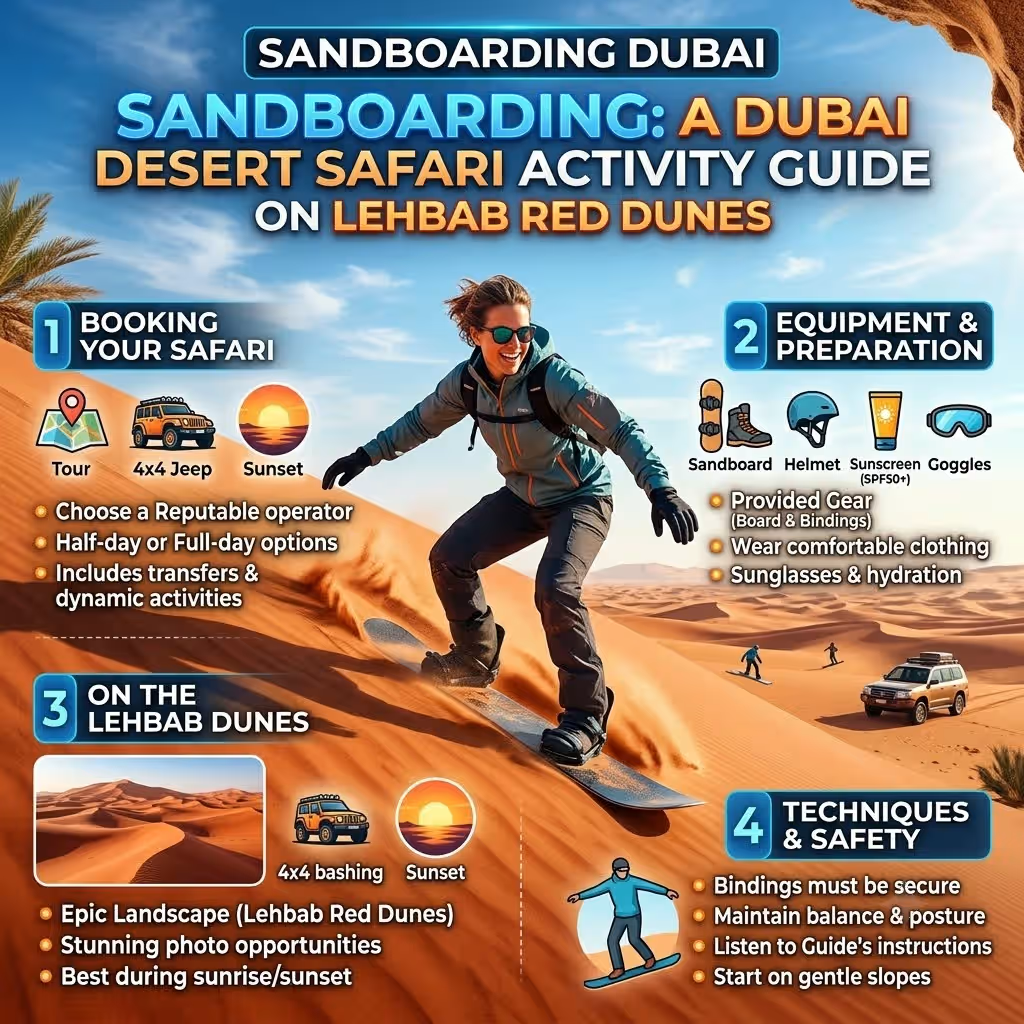
Dubai’s dunes aren’t just a backdrop for photos. They’re one of the few places in the world where you can strap into a board and ride sand the way snowboarders ride powder. If you’ve searched “sandboarding Dubai” wanting to know exactly how it works before you book, this guide walks you through it: what sandboarding is, the equipment involved, where to do it, what a session looks like step by step, and how it fits into a wider desert safari day out.
This is a how-to guide, not a booking page, so wherever a topic already has its own dedicated resource (pricing, what to wear, age limits), we’ll point you there rather than repeat it.
Most first-time visitors picture sandboarding as a five-minute novelty stop, but treated properly it’s a real skill with a real learning curve. The difference between someone who slides ten feet and stops, and someone who rides a full dune with control, usually comes down to whether they followed a few basic steps in the right order. That’s what the rest of this guide covers.
What Is Sandboarding, Exactly?
Sandboarding is the sand-dune equivalent of snowboarding: you stand (or lie) on a flat board with a smooth, hard base and slide down a slope of sand instead of snow. It doesn’t need chairlifts, snowmaking, or freezing temperatures, just a dune with the right slope, gravity, and a board built to glide over sand on its own. The balance principles borrow from both snowboarding and surfing, but sand’s higher natural friction makes it a gentler, more forgiving sport to pick up than either.
It’s easy to confuse sandboarding with dune bashing, but they’re not the same activity. Dune bashing is done from inside a 4×4, with a driver navigating the dunes at speed. Sandboarding is done on your feet (or stomach), directly on the sand. Most visitors end up trying both in the same session, since dune bashing and sandboarding are typically offered back-to-back at the same stop. If you’re weighing the two against each other, we’ve broken down the differences in more detail in our dune bashing vs quad biking guide.
Sandboarding vs Snowboarding, at a Glance
| Feature | Snowboarding | Sandboarding |
|---|---|---|
| Riding surface | Packed snow and ice | Loose or wind-packed dune sand |
| Base friction | Very low, speed builds fast | Higher, speed is more controllable |
| Footwear | Rigid boots required | Sneakers, sandals, or bare feet |
| Getting back up | Chairlift or gondola | Walking (there’s no lift on a dune) |
| Falling | Can be hard and cold | Soft and warm, rarely painful |
The higher friction is the detail most first-timers underestimate: it’s the reason sandboarding feels more forgiving and controllable than snowboarding, not less exciting.
Equipment You’ll Use
You won’t need to own or bring any gear yourself. On a guided stop, the equipment side is handled for you, but knowing what it does helps you understand why each piece matters:
- The board. Sandboard decks are typically laminated wood or a composite core with a smooth, hard-wearing base (often a Formica or laminate surface) built to withstand the abrasive nature of sand without wearing down quickly. The base is finished to glide on sand on its own; no waxing is needed before a run, unlike a snowboard on snow.
- Bindings or straps. Some setups use simple foot straps for a casual, slip-on ride; steeper runs sometimes use a more secure boot-and-binding setup similar to snowboarding, giving you more control at higher speed.
- Eye protection. Sunglasses or sports goggles are worth wearing, especially on windier days. Fine sand kicked up mid-run is the main source of eye irritation, not the ride itself.
Is Sandboarding Included in Desert Safari Packages?
Yes. Sandboarding isn’t an optional add-on or a separate booking; it’s a standard part of every desert safari package, not just some of them. Wherever your itinerary takes you for dune bashing, sandboarding happens at the same stop, as one continuous part of the dune segment rather than a separate location or a separate leg of the day. That holds across:
- Morning desert safaris: cooler sand, quieter dunes, more room to practice (morning desert safari details)
- Evening desert safaris: the classic sunset version, often paired with BBQ and entertainment (evening desert safari details)
- Self-drive desert safaris: if you’re behind the wheel yourself, sandboarding is included at the same dune stop along the route (self-drive desert safari guide)
Because it’s built into every package rather than something you opt into separately, the practical questions people have (cost, what’s included, group size) are answered on our desert safari packages page and pricing guide rather than here. This guide focuses purely on the technique: how to actually get down the dune once you’re standing at the top of it.
Where Sandboarding Happens Near Dubai
Not every dune is suitable for sandboarding. You need a slope steep and long enough to build real speed, with soft, fine sand that doesn’t grind you to a halt halfway down. In practice, that narrows things down to two areas:
- Al Lahbab (Big Red): the tallest, steepest dune commonly used for sandboarding, popular precisely because the drop is dramatic enough to feel like a real ride
- Al Aweer: the other main sandboarding location near the city, with dune terrain suited to the same style of run
These are the two locations where desert safari sandboarding stops actually take place. Other desert areas around Dubai are used for different activities on a safari, but not for sandboarding itself. For a broader map of where each desert area sits relative to the city, our guide to all Dubai deserts and their locations is worth a look, and if you’re deciding between routes, our Al Aweer vs Lahbab desert safari comparison breaks down how the two compare.
Best Time to Go Sandboarding
Sand holds heat, and by midday in the warmer months it’s genuinely uncomfortable, even risky, to be barefoot or kneeling on a dune. Early morning and the hour before sunset are the two windows most tours use, both for comfort and for the way the low light makes the dunes easier to read as you’re learning to judge slope and speed. Timing shifts by season, so if you’re planning around a specific month, our Dubai desert climate guide by month breaks down what to expect. In peak summer heat, keep footwear on between runs rather than going barefoot; surface sand temperature can climb well beyond what’s comfortable to stand on.
What to Bring
Keep it simple: closed-toe shoes you don’t mind filling with sand, breathable layers, and sun protection. Sunglasses or goggles are worth packing too, for the reason covered in the equipment section above. A scarf or light headcover helps in windier conditions. We’ve written a full breakdown of desert-appropriate clothing and gear in our what to wear for a Dubai desert safari guide; it applies directly to a sandboarding stop as well, so we won’t repeat it item by item here.
How to Read a Dune Before You Ride
A few seconds of assessment before you ever put a board down saves most beginners their worst falls. Dunes aren’t uniform; wind constantly reshapes them, which means the same slope can behave differently from one week to the next. Two things are worth checking with your guide before your first run:
- Slope consistency. A good sandboarding run has a steady gradient from top to bottom. A dune with a sudden dip, ridge, or flattening midway will throw off your speed and balance unpredictably, so guides tend to favor the same handful of tried-and-tested runs rather than whatever dune happens to be nearest.
- Sand texture. Freshly wind-blown sand on the surface is loose and slow. Sand that’s been packed down by wind and previous riders is faster and smoother. Neither is “better,” but knowing which one you’re on changes how much push-off effort you need at the top.
Your guide will already know the answer to both of these for the run they’re setting you up on, so this isn’t something you need to judge alone, but understanding why they’re picking one line over another helps the whole thing make more sense as you’re doing it.

Common Mistakes First-Timers Make
A handful of small errors account for almost every awkward first run:
- Leaning too far back. Sand’s friction means you don’t need to fight the slope the way snow can demand; overcorrecting backward is what causes the nose of the board to dig in and stall unexpectedly. Weight forward and centered is generally the more controllable position.
- Gripping the board too hard. Tension travels through your whole body and makes small balance corrections harder, not easier. Loose hands, relaxed shoulders.
- Skipping the practice slope. Heading straight for the steepest dune on the first attempt is the single biggest reason people end up frustrated rather than having fun. The technique needs one gentle run to click before speed adds any value.
- Standing up too soon. If your first prone run didn’t feel controlled, doing a second prone run is a better use of time than jumping straight to standing. The stopping technique especially benefits from repetition before you add the extra challenge of staying upright.
- Forgetting sun and water breaks between runs. Climbing back up a dune repeatedly is more physically demanding than it looks, and it’s easy to keep pushing through several runs without realizing how much water you’ve lost.
How to Sandboard in Dubai: Step-by-Step
This is the core of it: the actual technique, broken into the order you’ll experience it on the dune.
Step 1: Get Your Board From Your Guide
Boards are provided by your guide, so you won’t need to bring or buy one, Before your first run, take a second to get a feel for the board’s size and where the grip points or straps are, so you’re not figuring that out for the first time already at the top of the dune.
Step 2: Decide Standing or Lying Down
You have two options for your first run, and there’s no wrong choice:
- Lying prone (like sledding). You lie face-down or on your back with your feet forward, hands gripping the front edges. This is the lower-risk option and the one most guides recommend for a genuine first attempt, since there’s less to balance and a shorter distance to fall.
- Standing (like snowboarding). Both feet on the board, sideways to the slope, sometimes secured with straps or bindings on steeper runs. This gives you more control once you’ve got a feel for the sand, but it’s harder to hold on a first run and worth saving until you’ve done at least one descent lying down.
Step 3: Pick a Starting Slope
Don’t start on the steepest run on the dune. Walk with your guide to a shorter, gentler section first; the goal of run one isn’t speed, it’s understanding how the board responds when you shift your weight. Once that feels natural, you move to steeper terrain.
Step 4: Get Into Position at the Top
If lying down: position your chest and hips centered on the board, hands gripping the front corners, feet slightly raised off the sand behind you. If standing: plant both feet across the board, knees bent, weight low and centered. This is the same base stance used in snowboarding and skateboarding, and if you’ve done either before, your body will recognize it immediately.
Step 5: Commit to the Push-Off
Hesitating at the edge does two things: it wastes the momentum you need to actually glide, and it gives you more time to overthink the balance. Once you’re positioned, lean your weight slightly forward and centered, and let gravity take over. A short push with your hands or a back foot is usually enough to get moving on a soft dune.
Step 6: Control Your Speed and Line
On the way down:
- Prone riders steer by shifting weight left or right and can slow down by digging heels or hands into the sand on either side.
- Standing riders control speed the way a snowboarder does, angling the board more across the slope to slow down, or pointing it more directly downhill to accelerate.
Keep your eyes on the bottom of the run, not on your feet; where you look tends to be where you go.
Step 7: Learn to Stop
The most common beginner mistake is not knowing how to stop until you’re already at the bottom. To stop earlier: prone riders dig both hands and toes into the sand simultaneously; standing riders turn the board fully sideways across the slope and let the edge bite into the sand, similar to a hockey stop on a snowboard. Practice this deliberately on your second or third run rather than waiting for an emergency.
Step 8: Fall Correctly (Because You Will, at Least Once)
If you feel yourself losing balance, don’t stiffen up or try to catch yourself with a locked arm; that’s how wrists get hurt. Let your body relax and roll with the fall. Sand is forgiving compared to almost any other surface you could crash on, and a relaxed tumble almost always ends without injury, aside from sand ending up in places you didn’t expect. Loose jewelry, phones, and anything else you don’t want buried are best left in the vehicle before your run.
Step 9: Climb Back Up the Smart Way
This is the part that surprises most first-timers: climbing back up a soft dune is more tiring than the ride down. Walk in a diagonal zigzag rather than straight up the slope; it’s a longer path but uses far less energy than fighting the steepest line directly. Follow footprints already left in the sand where possible, since packed sand holds your weight better than untouched sand.
Step 10: Progress to a Steeper Run
Once you’ve completed a run or two and you’re comfortable with steering and stopping, move to a steeper section of the dune. This is usually when guides walk groups over toward Big Red-style terrain if that’s part of your route. The technique doesn’t change; the speed and the feeling of it do.
Safety Notes Worth Knowing
Sandboarding is low-risk compared to most adventure activities on a desert safari; there’s no vehicle involved and falls happen onto soft sand, but a few things matter:
- Always sandboard with your guide present, not alone on an unfamiliar dune
- Drink water before and after, even if you don’t feel thirsty; desert heat dehydrates faster than it feels like it does
- Boards are built for one rider at a time. Riding tandem puts uneven weight on the board and increases the odds of it flipping or the nose digging into the sand, so keep it to solo runs
- There’s no strict weight limit for the boards themselves, but the sport does ask for reasonable balance and stamina to manage the climb back up; anyone with recent injuries, chronic back issues, or significant knee problems should check with their guide before joining
- If you’re pregnant, travelling with young children, or have a health condition that affects balance, check suitability first; we cover this in detail in our guides on desert safari safety during pregnancy, desert safari for kids, and desert safari for senior citizens
Sandboarding vs Other Desert Activities
Sandboarding is usually one stop among several on a desert day, so it helps to know how it compares:
| Activity | Effort Level | Who It Suits | Where It Happens |
|---|---|---|---|
| Sandboarding | Active, on foot | Anyone reasonably mobile | On the dune itself |
| Dune bashing | Passive, vehicle-based | Groups and families | Inside a 4×4 |
| Camel riding | Passive, low effort | All ages | Along set desert trails |
| Quad biking | Active, vehicle-based | Independent riders | Marked desert tracks |
For a deeper side-by-side on the vehicle-based options, see our dedicated dune bashing vs quad biking comparison; we’ve kept the detailed breakdown there rather than duplicating it in this guide.
Combining Sandboarding With the Rest of Your Desert Safari
Most itineraries stack activities in the same visit. A typical order looks like: dune bashing and sandboarding together at Al Lahbab or Al Aweer, then camel riding once you reach camp, followed by dinner and entertainment. If you’re building out a full day and want to see how all the pieces typically fit together, including which camps run sandboarding as a standard stop, our desert safari camps overview is a useful next read, alongside our broader guide to Dubai’s adventure activities if you’re comparing sandboarding against other things to do during your trip.
If you want the higher-intensity version of the dune-riding experience, some routes offer an extended stop; see our guide on desert safaris with extreme dune bashing for what that adds to the day.
Group composition changes what a sandboarding stop looks like in practice, too. A family group with young kids will usually get more time on a single gentle slope with a guide supervising each run closely, while a group of independent adults might push through several dunes of increasing steepness in the same window. If you’re booking specifically around who’s in your group, our guides on desert safaris for families and desert safaris for first-timers go into how the pacing and activity order typically adapts.
Booking a Sandboarding Stop
Since sandboarding comes bundled into desert safari tours rather than sold separately, booking it just means booking the safari that includes it. If you’re deciding between the morning, evening, and self-drive formats linked earlier in this guide, our step-by-step guide to booking a desert safari in Dubai walks through the process, and our packages page lists current tour options. For cost specifics, the desert safari pricing guide has the up-to-date breakdown by tour type and group size.
Frequently Asked Questions
Do I need experience to try sandboarding? No. It’s beginner-friendly by design; guides start everyone on a gentle slope and lying-down position before progressing to standing or steeper dunes.
Is sandboarding safe? Yes, for the general population. It carries less risk than most desert activities since there’s no vehicle involved and falls land on soft sand. Specific groups, including pregnant travellers, young children, and seniors, should check the linked safety guides above first.
Is sandboarding harder than snowboarding? Most people find it easier to pick up. Sand’s higher friction slows you down naturally compared to snow, so speed builds more gradually and there’s more time to correct your balance before things get out of hand.
What happens if I fall? Falling on sand is common and rarely painful; it’s soft enough to cushion most impacts. The main downside is sand getting into pockets, shoes, and clothing, so leave loose valuables and unsecured electronics in the vehicle beforehand.
How long does a sandboarding stop last? It’s usually one segment within a longer desert safari rather than a standalone booking, so the time on the dune itself is typically a short window rather than a full activity in its own right, enough for several runs per person.
Can I sandboard in the summer? It’s offered year-round, but heat management matters more in summer months. Morning slots become more common in peak heat for exactly this reason; see the linked climate guide above for month-by-month detail. Keep footwear on between runs when the sand is hot.
Is sandboarding included in every desert safari package? Yes. It’s a standard part of every desert safari package, morning, evening, and self-drive alike, not something you need to add on separately. See the packages page for the full list of tour options.
Standing or lying down, which should I actually try first? Lying prone, even if you’ve snowboarded or skateboarded before. The sand surface behaves differently from snow or pavement, and a prone run gives you an honest read of how fast and how grippy that particular dune is before you add balance into the mix.
Do I need to be fit to sandboard? No specific fitness level is required for the ride down; that part is passive once you commit to the push-off. The climb back up the dune between runs is the more physically demanding part, so pace yourself if you’re not used to walking on soft sand.
Can two people ride the same board at once? No. Boards are designed for a single rider. Riding tandem shifts the balance point and makes the board far more likely to flip or bury its nose mid-run, so each person takes their own turn.
Final Thoughts
Sandboarding is one of the simplest adventure activities to pick up on a Dubai desert trip: no prior skill needed, no equipment to bring, and a technique you can genuinely learn in the time it takes to walk up and down a dune a few times. The steps above cover the how; if you’re ready to see it firsthand, browse our desert safari packages or read what past guests have said about their sandboarding stop before you book.